Full Interior & Exterior House Painting, Baulkham Hills
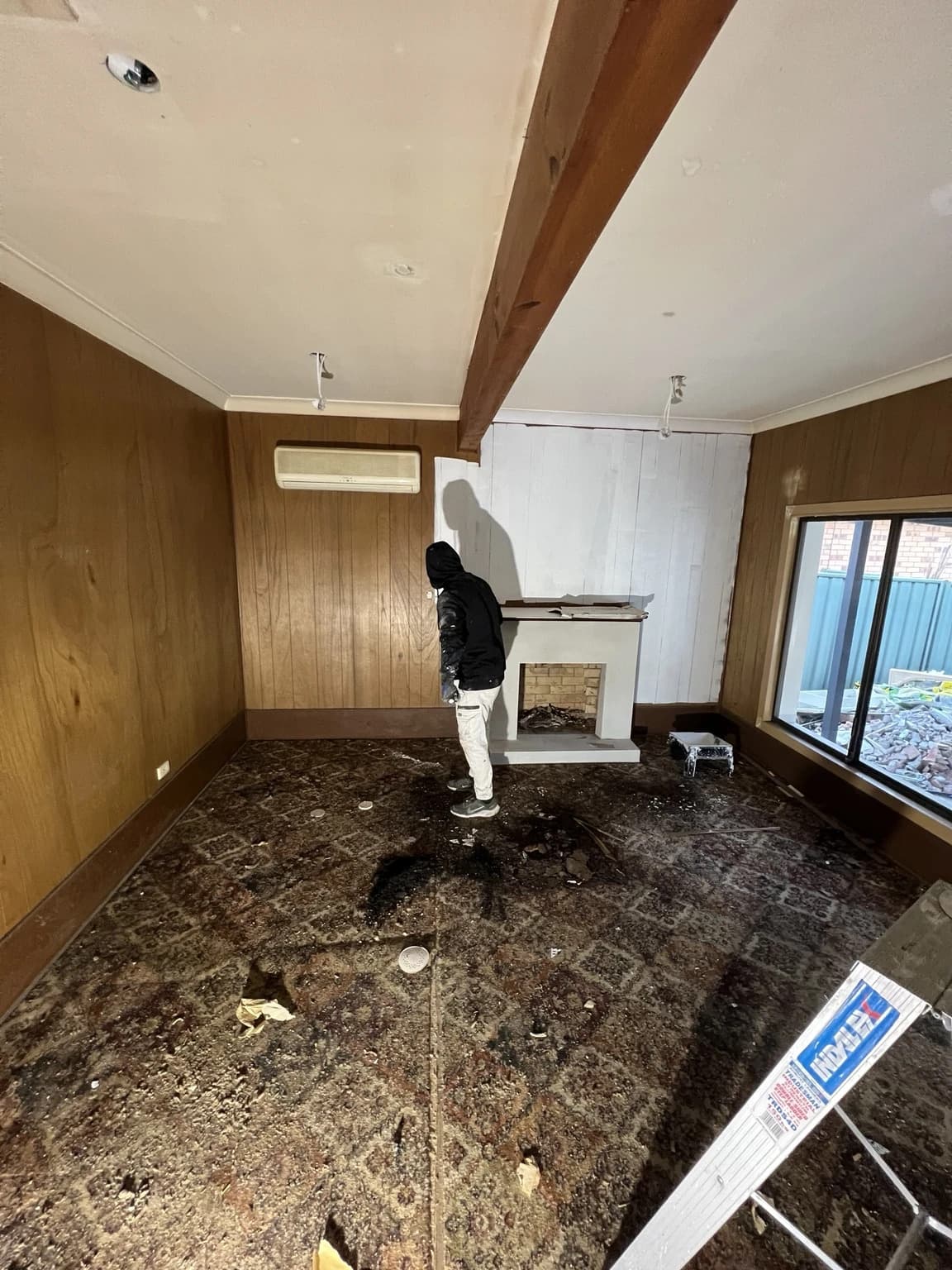
When we first inspected this Baulkham Hills home, nicotine staining was visible across the walls, ceilings and timberwork. There was also widespread mould, cooking-oil staining on sections of the walls, extensive cracking and water-damaged ceiling areas. Much of the work needed to happen before the finish coats could begin.
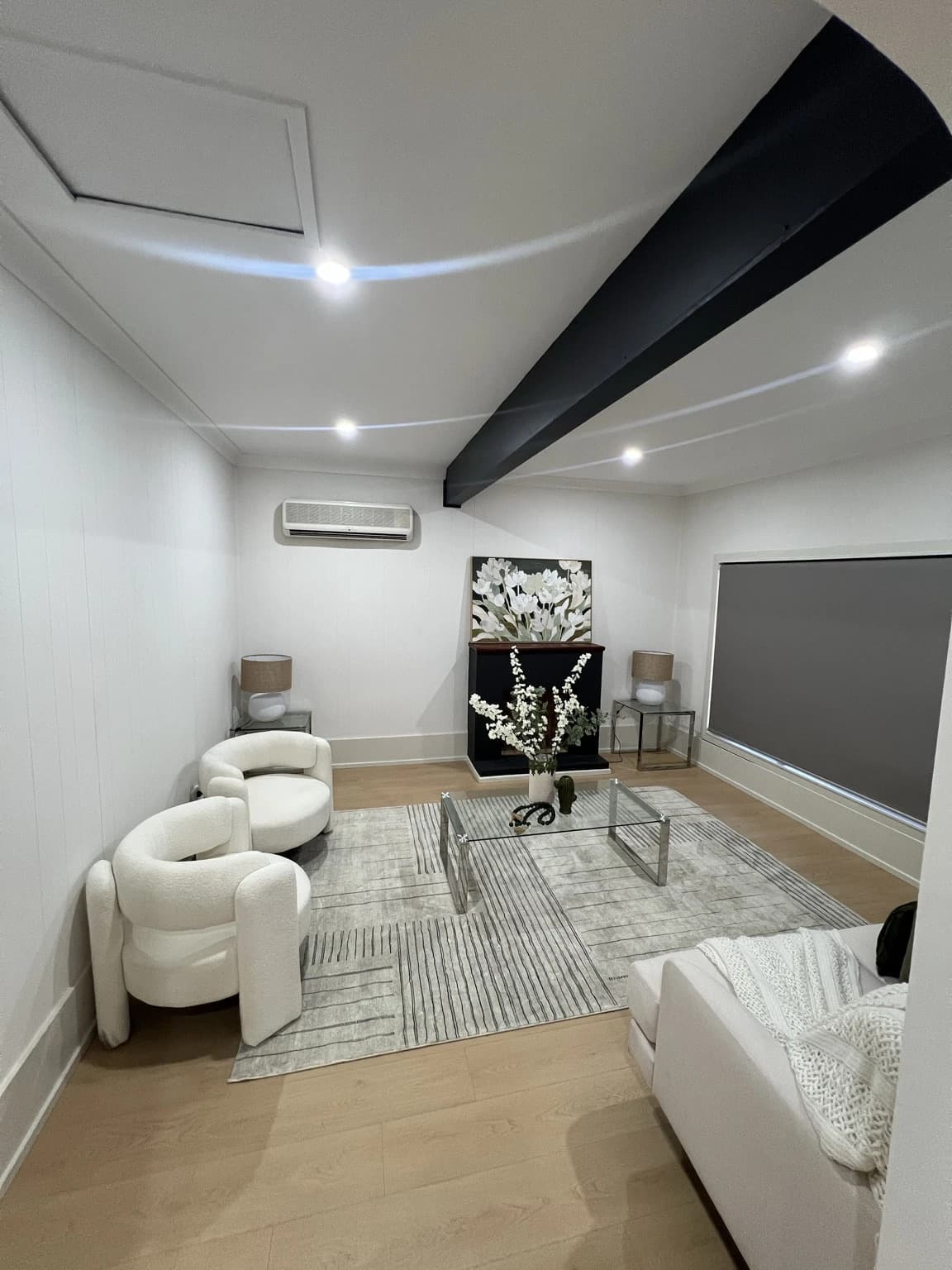
We removed the textured ceilings in five areas — two rooms, the bathroom, laundry and toilet — and installed new plasterboard. The associated cornices were removed during that work. Elsewhere, water-damaged ceiling sections needed patching and repairs where there were holes, cracks, swelling and sagging.
Wallpaper removal was another substantial part of the preparation. A border approximately 20 centimetres wide ran through much of the house, and two rooms each had a wallpapered feature wall. We used wallpaper remover together with a steamer to strip these areas before preparing the walls for painting.
The old carpet was heavily soiled and made working in the rooms difficult. As the owners were arranging new timber flooring, our team removed the carpet during the preparation stage.
We applied a mould-killer spray to the mould-affected areas, then wiped them with a damp cloth. The areas affected by mould, cooking-oil staining and nicotine staining received Zinsser primer before the finishing coats.
We repaired the internal cracks and used Zinsser primers across many of the walls, ceilings and timber surfaces. One coat was not sufficient in some areas, so those sections received additional applications. We also used Zinsser B-I-N in selected areas as part of the stain-blocking work. Repaired ceiling sections were primed with a Dulux primer.
For the interior finishes, we used Dulux wall paint, a flat Dulux ceiling paint and Dulux Aquanamel on the painted timberwork. The work was staged around the new flooring: before the timber floor went in, we applied two coats to the walls and primed and painted timberwork including doors, door jambs, windows and window frames. Once the flooring had been installed, we returned to complete the remaining finishing work.
Outside, the existing coating on the eaves had a network of cracks, with peeling paint in several areas. We sanded and patched the affected surfaces, applied Dulux Sealer Binder where needed, and left those treated areas for approximately 24 hours before continuing with the eaves painting. The exterior repaint used Dulux Weathershield.
Some exterior timber also had moisture-related deterioration. In sections that could be repaired, we removed the deteriorated material, rebuilt the affected areas with filler and exterior patching products, and painted the repaired surfaces. We also finished the timber entry door with Cutek Oil.